


The Science of Change: Leading Literacy Together
- DocHolbrook

- Oct 19, 2025
- 5 min read
From the statehouse to the schoolhouse, it takes every one of us to make sure every child learns to read
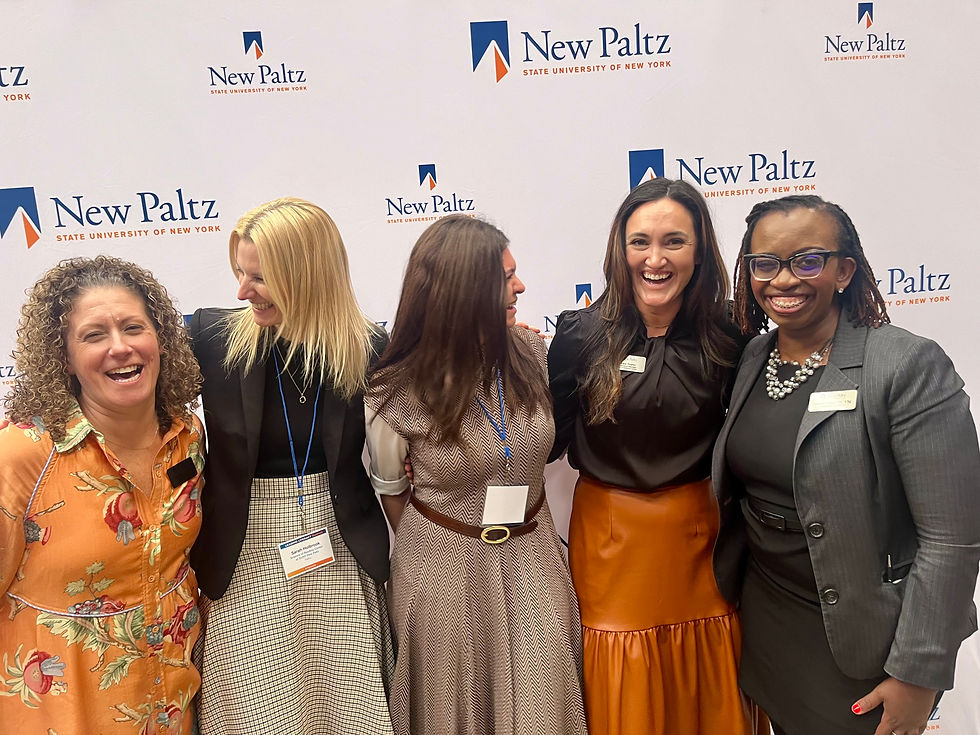
This past week, I had the privilege of attending the first-ever Leading Literacy Summit in Albany, hosted by the Science of Reading Center at SUNY New Paltz. It was our inaugural event—and it was completely sold out. The room was filled with educators, policymakers, researchers, journalists, union leaders, and advocates from across New York and beyond. We gathered around one shared question: How do we improve reading outcomes for every child?
But as the conversations unfolded, it became clear that this summit wasn’t only about the Science of Reading. It was about something even bigger—the Science of Change.
Because the truth is, changing how an entire system teaches reading is complex work. It’s not just about choosing the right program or training teachers in new routines. It’s about rebuilding the ecosystem that surrounds reading instruction—policy, leadership, preparation programs, professional learning, and community engagement. It’s about all of us, at every level, moving in the same direction.
The summit reminded me that when it comes to literacy, there is no single hero. Real change happens when every player—state leaders, district administrators, union partners, teachers, and families—comes together with one shared purpose: to ensure that every child, in every classroom, learns to read.
The Policy Level: Building a Foundation for Change
Real, scalable change begins with policy—with leaders who create the conditions for evidence-based instruction to thrive. At the summit, state officials shared how legislation, certification standards, and funding can open doors for districts to make meaningful shifts toward the Science of Reading.
We’ve seen this play out most powerfully in Mississippi—what many call the Mississippi Miracle, though Dr. Kymyona Burk, the state leader who helped drive it, reminds us it was really the Mississippi March. It wasn’t magic; it was the result of years of hard work, consistency, and collaboration across all levels of the system. State leaders established clear expectations, invested deeply in teacher knowledge, and stayed the course.
For too long, reading reform has been left to individual schools or teachers to navigate alone. Thoughtful policy makes this work systemic. It creates consistency and equity across districts. But as Mississippi reminds us, real change takes hard work, consistency, and collaborative effort across all invested partners. Good policy doesn’t exist in isolation—it only works when it’s informed by teachers and shaped by the realities of classrooms.
The District Level: Turning Policy into Practice
Districts are where policy meets reality. They are the translators—the ones turning big ideas into systems that actually work for teachers and kids.
I spoke with district leaders and coaches who are doing this hard, strategic work: aligning curriculum, mapping assessments, and creating literacy leadership teams that sustain professional learning. The Science of Reading isn’t just about changing instruction—it’s about building structures that allow good instruction to last.
The districts making the most progress are those investing in people, not just programs. They’re designing schedules that protect intervention time, embedding coaching into teachers’ workdays, and using assessment data to drive real instructional decisions.
The Union Level: Partnering for Progress
One of the most inspiring moments of the summit came from Yonkers, where the district partnered with the Science of Reading Center and their teachers’ union to develop a plan for retraining educators in evidence-based practices.
Both the union president and the superintendent stood together on stage to share the impact of that partnership—and how it has transformed teacher confidence and practice across their district. It was a powerful example of what happens when labor and leadership come together in shared purpose.
Sustainable literacy reform can’t be something done to teachers—it has to be something done with them. When districts and unions collaborate on professional growth and system-wide training, we stop dividing energy and start amplifying impact.
The Classroom Level: Teachers at the Heart of It All

At the center of every policy, every plan, and every summit conversation are teachers.
When I was a classroom teacher, I never fully realized how much was happening behind the scenes—the policy work, the funding conversations, the system-level planning that shapes what we do every day. Teachers are so focused on their students—and they should be. That’s exactly where their energy belongs.
Our collective responsibility is to create environments where teachers can stay focused on teaching—where they don’t have to worry about whether the system around them is strong enough to support their work.
At the summit, Dr. John King, Chancellor of SUNY and former U.S. Secretary of Education, reminded us why this matters. He shared the story of his fifth-grade teacher, Mr. Osterweil, who quite literally changed his life. After losing both parents at a young age, King found stability and hope in that classroom. Mr. Osterweil gave him structure, belonging, and access to books that opened doors to new worlds.
That single teacher’s belief helped shape a child who would grow up to shape education policy for an entire nation. It’s a powerful reminder that behind every initiative, every data point, and every reform effort are teachers who change lives one reader at a time.
The Family and Community Level: The Ties That Hold It All Together

Literacy doesn’t begin—or end—in the classroom. It begins at home, with the people who nurture curiosity, model language, and refuse to give up on a child.
Former NFL player and motivational speaker Deon Butler shared a story that moved the entire room. Deon didn’t learn to read until he was an adult. Growing up, he faced challenges that might have stopped him, but he also had someone who refused to let him quit—his granny.
She was his constant: the person who believed in him, who reminded him that his future wasn’t defined by what he couldn’t do yet. That belief became his foundation. With the help of a tutor who later taught him to read, Deon changed his own story.
Now, he travels across the country speaking to students and teachers, spreading a message of hope and resilience. His story is proof that literacy isn’t just a skill—it’s a lifeline. It’s something that connects generations, communities, and futures.
The Science of Change
The Leading Literacy Summit reminded me that improving reading instruction isn’t just about the science—it’s about the systems. It’s about the people who make change possible.
It takes policy that clears the path. It takes districts that turn that policy into practice. It takes unions that work hand in hand with districts to create supportive conditions where teachers can focus on what matters most—teaching kids to read. It takes teachers like Mr. Osterweil, who create classrooms where kids feel safe, capable, and inspired. It takes families and communities like Deon Butler’s granny, whose belief becomes the spark that lights a lifelong fire.
When those pieces move together—aligned in purpose, grounded in research, and focused on children—we stop reacting to problems and start designing for progress.
Educational change is hard. It’s messy, emotional, and deeply human. But when we choose collaboration over competition, systems over silos, and action over blame—we make space for lasting change.
Because at its core, the Science of Reading is also the Science of Change—a collective effort to give every child the most powerful tool of all: the ability to read, to think, and to shape their own future.
When we know better, we teach better.
See you next Sunday!


Comments