


She Took Me to the Library
- DocHolbrook

- 24 hours ago
- 4 min read

A Mother’s Day Reflection on Language, Literacy, and the Power of Libraries
By Doc Holbrook
Once a Week, We Went to the Library
Once a week, we went to the library. That was just what we did.
We checked out books. In the summer, we signed up for reading challenges. And as I got older, I remember the excitement of finally venturing to the other side of the library, where the adult books were kept. It felt important somehow, like crossing into something bigger.
I remember how the library smelled. I remember the cold air hitting my skin as I walked in from the summer heat. I remember wandering the aisles, pulling books from shelves, carrying home stacks that felt almost too heavy for my arms.
I don’t really remember learning to read.
But I remember that.
And I remember my mom, making sure we went every single week.
At the time, I don’t think either of us realized what those trips were really doing. Looking back now, after years working in literacy and education, I can see it so clearly.
She wasn’t just taking me to get books.
She was building my language.
Language Is at the Heart of Literacy
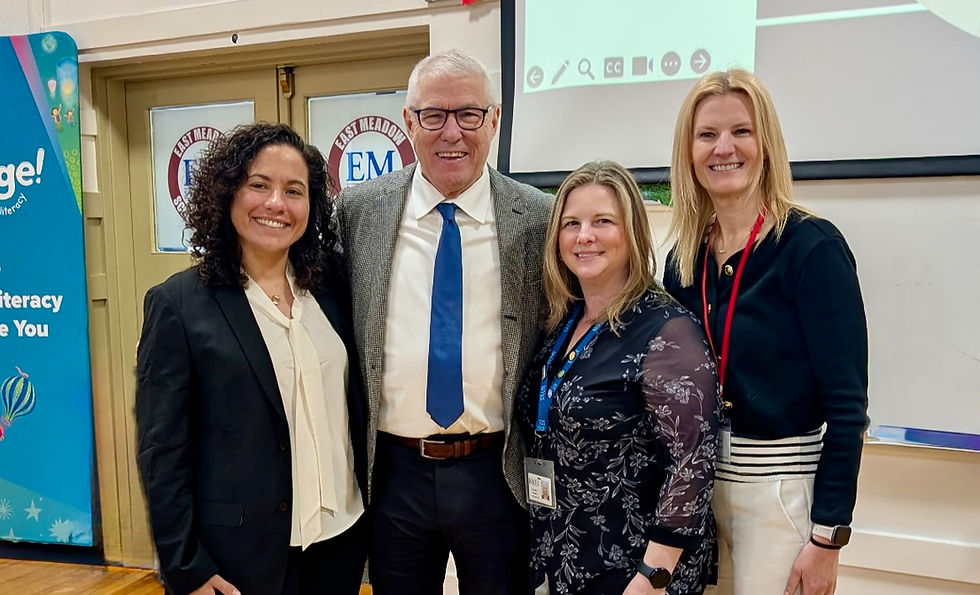
This past week, I attended The Reading League Summit, and one of the biggest themes throughout the conference was language.
How we build it. How we assess it. How deeply connected it is to literacy development.
Because before students can fully comprehend text, they need language. Vocabulary. Background knowledge. Syntax. Opportunities to speak, listen, and make meaning of the world around them.
In literacy, we often focus heavily on phonics, fluency, and comprehension.
But underneath all of it is language.
Scarborough’s Reading Rope reminds us that language comprehension is one of the essential strands woven into skilled reading. Without language, comprehension becomes incredibly difficult.
And the more I listened to conversations at the Summit, the more I kept thinking about something my friend and colleague Dr. Antonio Fierro often says:
“We are all teachers of language.”
Not just classroom teachers.
All of us.
And that includes librarians.
The Places Where Language Grows
Language does not only develop during a reading block.
It develops through experiences.
Through conversations.Through stories. Through hearing words and ideas we may never encounter otherwise.
Libraries provide those opportunities every single day.
Looking back now, I can see that my mom was giving me far more than books. She was giving me access. Access to language. Access to knowledge. Access to curiosity. Access to experiences beyond my immediate world.
What If We Thought About Libraries Differently?
Now, years later, as the Director of Humanities, I find myself thinking about libraries and access.
Because we know many of our students come to us with less vocabulary and less background knowledge than some of their peers. Not because they are less capable. Not because families do not care. But because access to language-rich experiences is not always equal.
And while our local libraries are incredible community resources, access is not always simple. Transportation matters. Schedules matter. Availability matters.
Which makes me wonder:
What if we stopped thinking about libraries as extras?
Because libraries already are part of schools. But too often, they exist on the edges of the system instead of at the center of it. They become specials. Prep coverage. A place students visit if schedules allow.
But what if we thought about them differently?
What if we saw libraries for what they really are: places where language grows?
Places where students encounter words they have never heard before. Ideas they have never considered. Topics that expand their understanding of the world.
What if librarians were viewed as an integral part of literacy development?
Because they are.
Libraries Should Be Part of the Literacy Vision
If we are serious about literacy, libraries cannot simply be “extra.”
They should be part of the schedule because they are part of literacy itself.
Librarians help students build background knowledge. They connect students to texts that spark curiosity and conversation. They create opportunities for students to engage with language in authentic ways.
And in many ways, they help create the exact conditions we say we want for literacy development.
The more I think about it, the more I believe librarians may be one of the most underused literacy resources in our schools.
Not because people do not value them, but because we often fail to fully integrate them into our literacy vision.
And maybe we should.
Maybe libraries should be open during the summer in communities where children can walk there. Maybe libraries should become part of summer routines again. Maybe we should stop waiting for students to find their own way to literacy-rich experiences and instead intentionally build systems that bring those experiences to them.
Because if students cannot always get to the library, maybe it is our responsibility to bring the library to them. Or better yet, to bring them to the library.
A Mother’s Legacy
This Mother’s Day, I keep thinking about how much of who I became started there, walking through those library doors with my mom.
The story hours. The summer reading challenges. The stacks of books.The cold air on a hot summer day.
Small moments that did not feel monumental at the time.
But they were.
To my mom—who first took my hand and walked me into the library—
You’re no longer here, but your legacy lives on in every story, every word, and every experience you made possible.
What you started in those quiet library visits didn’t end.
It lives on in me, in my children, and in the work I do every day to make sure every child has that same chance.
When we know better, we teach better! See you next Sunday!

References
Hollis Scarborough, H. S. (2001). Connecting early language and literacy to later reading (dis)abilities: Evidence, theory, and practice. In S. Neuman & D. Dickinson (Eds.), Handbook of Early Literacy Research (pp. 97–110). Guilford Press.
Hugh Catts, H. W., Adlof, S. M., & Weismer, S. E. (2006). Language deficits in poor comprehenders: A case for the simple view of reading. Journal of Speech, Language, and Hearing Research, 49(2), 278–293


Comments